
Categories
EU funding EU grants EU projects International relations

Culture for Cities and Regions

In 2013 and 2014, the DG Education Audio-visual and Culture of the European Commission was analysing the impact of its previous actions. It turned out that a great amount of good practices detected in past projects were followed by a low degree of transfer capacity.

From this take, the European Commission launched the Culture for Cities and Regions project, and subsequently for the participating cities.

My role as Head of International development of SAMOA, an agency for urban redevelopment in Nantes, was to contribute to the renown of Nantes as a European hub for urban planning and creative industries. For this reason, together with the staff of the Nantes Metropolitan Authority, we applied as a case study to be visited.

This €1 million project funded under the Creative Europe programme (DG EAC) aims to take stock of existing practices all over Europe in order to exchange and promote transfer of knowledge, to better understand successful cases of cultural investment, and to go into the details of policy planning and implementation. By making sure that cities and regions involved in the project place culture at the heart of their territorial development strategies, we aim for long lasting results that will be widely shared and showcased widely in Europe.

The purpose of the project is also to go beyond the study visits – on the one hand, with the provision of follow-up coaching to cities/regional administrations, which took part in the visits, in order to maximize its impact; and on the other hand, by reaching a larger number of interested parties through a broad dissemination of information (development of an online catalogue, website, newsletter, use of social media).

Three main dimensions will be explored throughout this project:

-culture and the creative industries for local economic development and urban regeneration

-cultural heritage as a driver for economic growth and social inclusion

-culture for social inclusion, social innovation and intercultural dialogue

During its three years, the project produced a catalogue of 70 case studies, organised 15 thematic study visits, and provided expert coaching for 10 cities/regions.
http://www.cultureforcitiesandregions.eu/culture/resources/Case-study-Nantes-Quartier-de-la-Creation-WSWE-9XZHT2

Categories
EU funding EU grants EU projects

United Nations University

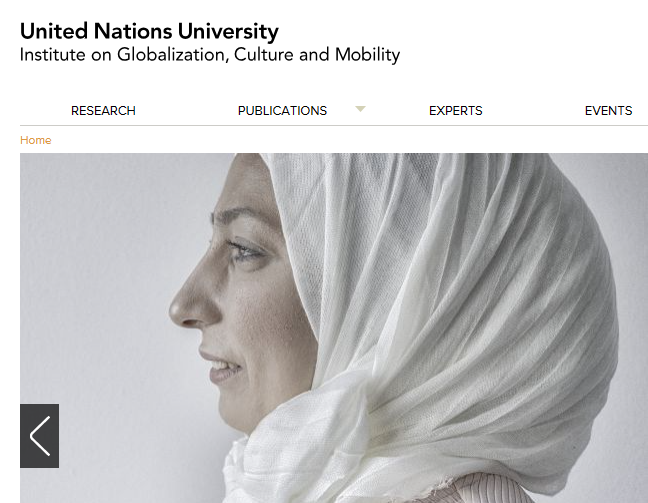
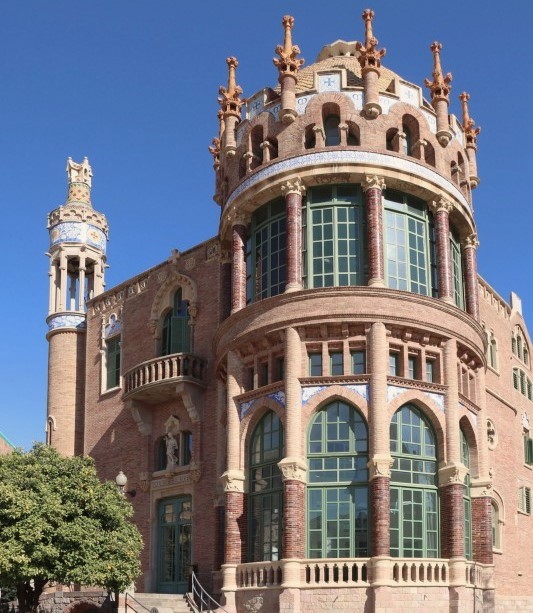
When the United Nations University decided to open a branch in Barcelona, devoted to higher education and academic research in the field of sociology and migrations, the Government of Catalonia and the City of Barcelona proposed a partnership. It included the possibility for the international organisation to use a prestigious landmark building in the city, a pavilion of the Hospital de Sant Pau.

The world famous modernist location had to be renovated to meet the operational and safety standards.

The local government decided to employ the European Regional Development Funds for this investment. It meant to be extremely cost-wise and careful from the architectural, legal and financial point of view.

My role was to support the financial auditing and the certification of the expenditures associated with the renovation works of the pavilion later hosting the University of the United Nations.

https://unu.edu/about/unu-system/unu-barcelona

Categories
Cultural and creative industries CCIs EU funding EU grants EU projects Regional Development

Openarch

OpenArch was a cooperation initiative to develop and enhance a network of Archaeological Open Air Museums throughout Europe with the aim of improving the public experience at such museums.

The project fostered creativity and innovation, especially in relation to the opportunities offered through better interaction between Archaeological Open Air Museums and their surrounding communities.

The project included a set of staff exchanges and a sequence of pilot actions in some selected locations, part of the international network of open air archeological museums.

My role was to support the preparation of the project proposal and its application to the call of the Culture Programme of the European Union in 2009 and 2010, and the definition of the budget and the financial follow-up.

http://openarch.eu/

Categories
Cultural and creative industries CCIs EU funding EU grants EU projects

Art directors’ club of Europe

The Art Directors Club of Europe is a non-profit organization founded in 1990 to promote the best creative work in design and advertising from across the continent.

For 28 years, the ADCE has grown from its original 11 founding local organizations and has doubled to 22. It has also evolved to include not only the awards show, but also a comprehensive educational program and the ADCE Festival.

In 2012, I was asked to conceive and draft the project to be submitted to the EU Culture Programme. The ADCE was subsequently awarded with €100,000 for its work as an international platform active in the field of cultural and creative industries.

https://www.adceurope.org/

Categories
Cultural and creative industries CCIs EU funding EU grants EU projects

Reengineering the moving image

Mire is a French association promoting cinema, experimental motion pictures and film processed audiovisual.

It enrolled in the capacity building programme that I implemented at the “Creative Factory” cluster in Nantes, to learn how to conceive and draft a project application to a call of the European Union. They applied in 2014 to a call of the Creative Europe programme and their project project “REENGINEERING THE MOVING IMAGE” was awarded a grant of 127.872,91 euros.

https://www.re-mi.eu/

Categories
Cultural and creative industries CCIs EU funding EU grants EU projects

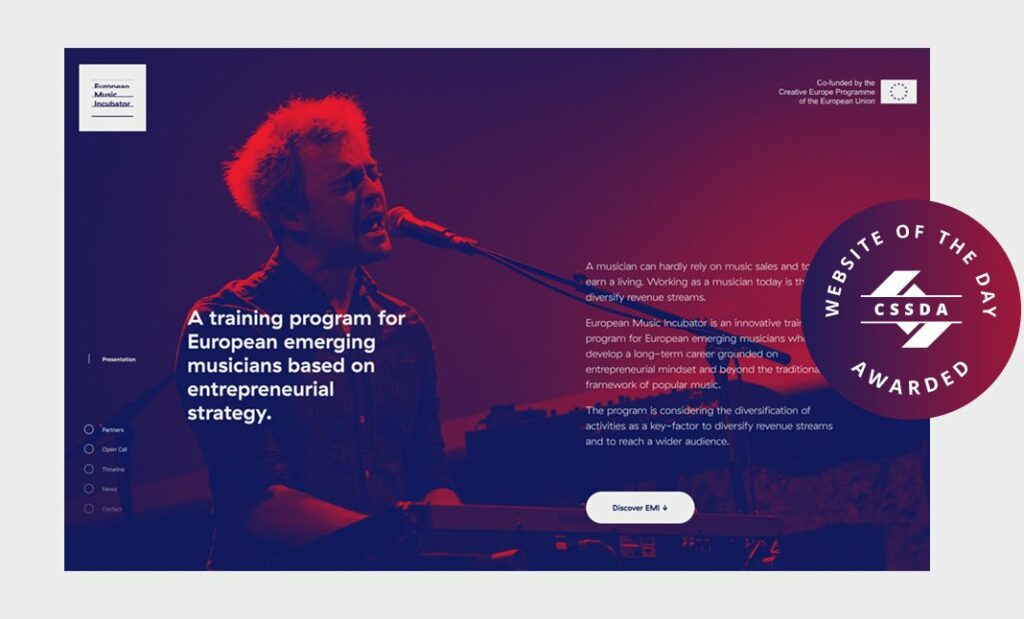
European Music Incubator

European Music Incubator aimed at develop musicians international careers as well as work on capacity building for entrepreneurship for artists in the music industry.

The project was designed and written by Trempolino, a French association already active in supporting local musicians.

Trempolino enrolled in the capacity building programme that I put in place at the “Creative Factory” cluster in Nantes, to learn how to obtain European funds for cooperation project.

The initiative was succesfully financed by the Creative Europe programme of the European Union in 2016 with a grant of 199,607.17 euros. https://music-incubator.eu/

Categories
EU funding EU grants EU projects

Europe Direct Label Grant

The European Commission has a service for Communication, called DG Comm, which is devoted to the promotion of the activities of the EU and their impact on the ground.

One of the tools is a network called Europe Direct and formed by a set of local points able to inform the citizens as well as redirect their questions to the good contact.

Every three years the label to be a “Europe Direct” information point has to be renovated.

In 2017 my team and I took care of the application to the call for the label of Europe Direct. In spite of the augmented competitiveness and reduced funding availbale, we managed to keep the label, including a grant of 90.000 euros over three years to run the local information point in Nantes (France).

https://ec.europa.eu/france/news/cied_2018-2020_fr

Categories
EU funding EU grants EU projects

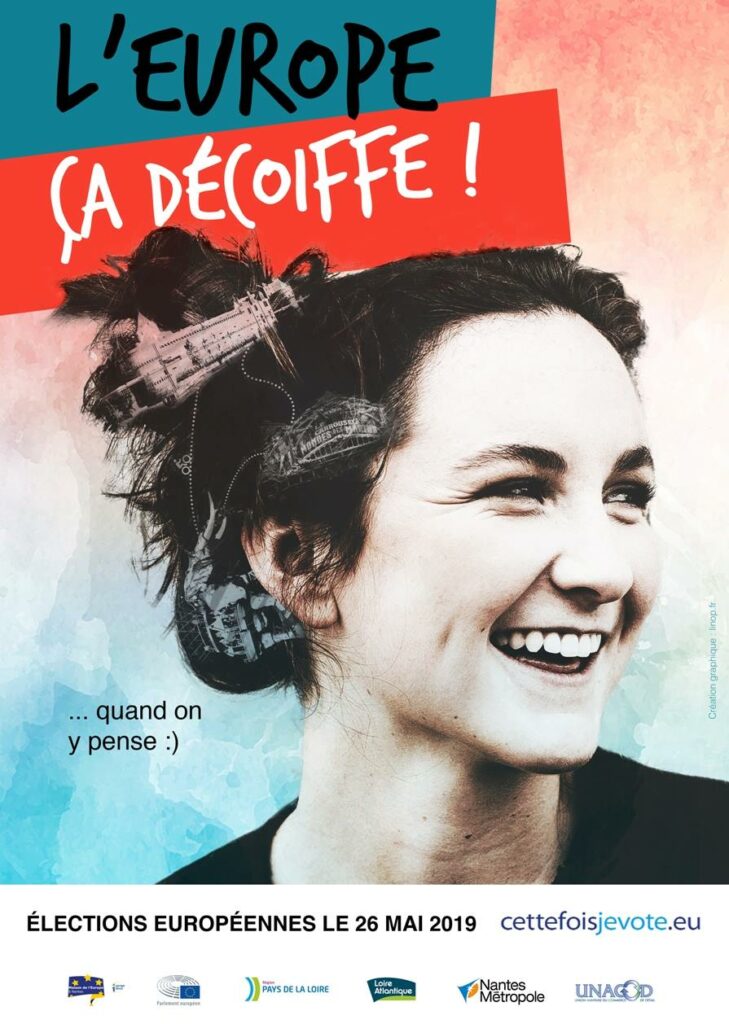
L’Europe, ça décoiffe

How to engage citizens in the global conversation about the future of the European Union? How to make the decision mechanisms of the EU comprehensible for the broader public? How to explain the importance of voting at the European elections?

Inspired by an experience run in Argentina, “L’Europe, ça decoiffe” is a communication project aiming at awakening the interest for the EU decision process and politics for the general audience and voters.

The application, submitted to a call of the EU Parliament in 2018, was granted with more than 30.000 euros to train hairdressers and barbers about how the EU works and to share this knowledge with their clients at their shops.

In this way, the typical distance of the audience to this kind of topics was reduced by activating a network of “ambassadors”: the hairdressers.

My role was was to conceive, draft and submit this project.

https://www.facebook.com/events/cci-nantes-st-nazaire/leurope-%C3%A7a-d%C3%A9coiffe-/365173634327333/

Categories
Cultural and creative industries CCIs EU funding EU grants EU projects INTERREG Regional Development

LabTechnoCulturS

LabTechnoCulturS (Culture and Technology Lab) was a project to apply the usage of information and communication technology to a set of selected spots of the industrial heritage in the Euroregion Pyrenees Mediterranean. My role was to coordinate the project at the Culture Departement of the Government of Catalonia as the leading partner of this cross-border consortium.

Total grant: 510 621,25 euros

http://4.interreg-sudoe.eu/FRA/f/138/34/LABTECHNOCULTURS/Les-projets-approuves/LEuroregion–un-laboratoire-technologique-et-culturel-pour-lEspace-SUDOE

Categories
Cultural and creative industries CCIs EU funding EU grants EU projects INTERREG Regional Development

C.U.L.T.U.R.E.

Have you ever heard of the problems tourism can generate in city centers? Or a conversation about local souvenirs that may actually be produced elesewhere?

C.U.L.T.U.R.E. aimed to reflect at the role of “culture” in its most wide meaning, such as a common matrix for the selected cities forming the consortium, all awarded with the World Heritage label by Unesco. 

The project was a Transnational Cooperation project co-funded by the European Regional Development Fund through the MED Programme.

A special attention is given to culture as driver for economic growth. The chosen approach was to integrate the knowledge, the practices and the financial tools used by the different level of local governance. Local public players shared the same issues, needs and objectives.

The Consortium was formed by regional and local authorities from Italy, Spain and Greece and Croatia.

My role was to support the financial and administrative follow-up of the Municipality of Tarragona (Spain), as well as the technical support to the project coordination.

Total grant: 1.078.335,86 euros.https://interreg-med.eu/